
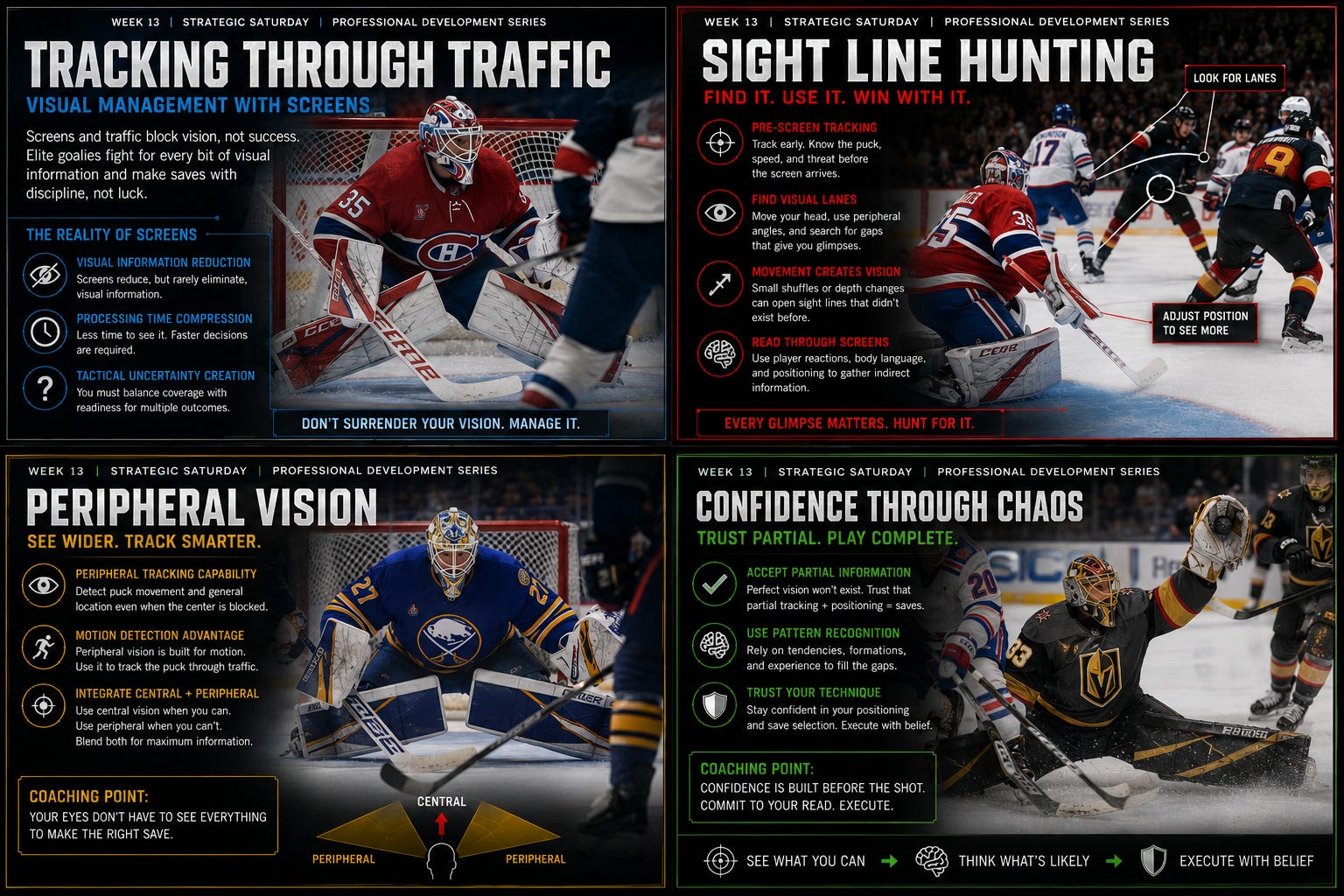
Tracking Through Traffic: Visual Management with Screens
Week 13 / Strategic Saturday / Professional Development Series

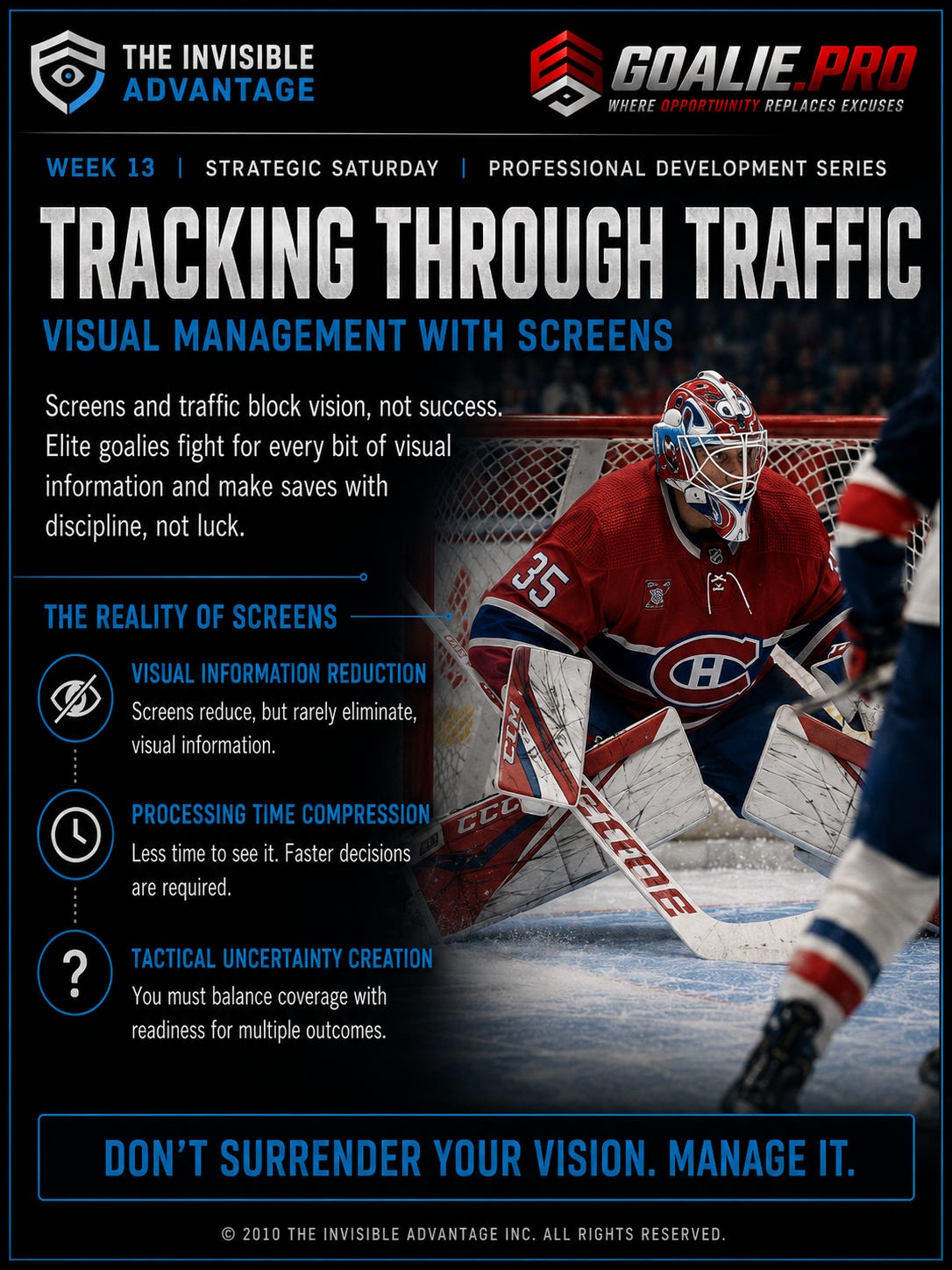
Screens and traffic represent the most common and challenging visual obstacles in goaltending, creating situations where perfect puck tracking proves impossible and you must manage partial visual information while maintaining save execution capability. Yet most goaltenders lose visual discipline completely when screens develop, rather than systematically fighting to maximize available visual information.
Elite screen management maintains maximum possible visual contact through systematic sight-line hunting, peripheral-vision utilization, and confidence in partial tracking, enabling effective save execution despite imperfect visual conditions.
Understanding Screen Impact
Screens don’t just block vision; they fundamentally alter the information available for tactical and technical decision-making, requiring adapted approaches distinct from those in clear-sight-line situations.
Visual Information Reduction: Screens reduce but rarely eliminate visual information completely. Even heavy screens typically allow partial puck tracking at times during carrier approach, shot preparation, or the release sequence.
The error involves treating partial visual obstruction as complete blindness, surrendering all tracking effort rather than maximizing whatever visual access exists.
Processing Time Compression: Screens reduce the duration of available visual contact, compressing visual processing time and requiring faster information extraction from briefer viewing opportunities.
This compression demands superior visual processing speed and pattern recognition enabling meaningful information extraction from limited visual exposure.
Tactical Uncertainty Creation: Reduced visual information creates uncertainty about exact shot timing, trajectory, and location, requiring tactical adjustments that balance coverage optimization with maintaining flexibility for various shot possibilities.
Systematic Sight Line Hunting
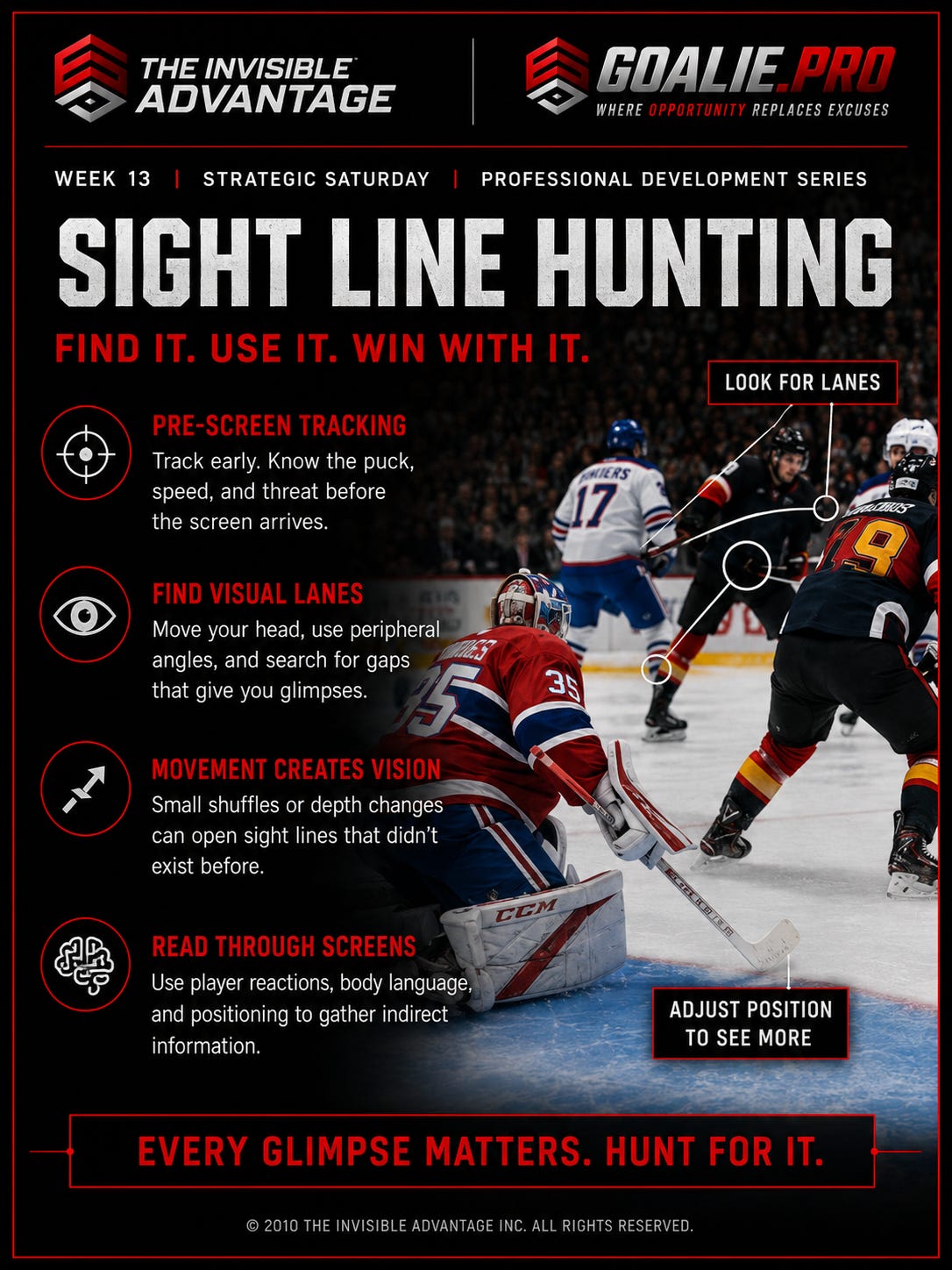
Rather than passively accepting visual obstruction, elite screen management actively hunts for any available sight lines providing partial puck tracking.
Pre-Screen Tracking: Maintain complete puck tracking before screens develop, establishing initial trajectory, carrier speed, and shooting probability that inform later decision-making even after visual contact degrades.
This pre-screen tracking provides contextual information that partially compensates for lost visual access during the screening period itself.
Finding Visual Lanes: Actively search for visual lanes through traffic by adjusting head position, using peripheral vision angles, or identifying gaps between screening players that allow brief puck glimpses.
These visual lanes rarely provide continuous tracking but frequent brief glimpses prove significantly more valuable than complete visual surrender.
Movement-Based Sight Lines: Your positioning movements can create dynamic sight line changes, potentially opening visual access that doesn’t exist from static positions.
Small lateral shuffles, depth adjustments, or body position changes may reveal visual lanes that weren’t available from your initial position.
Reading Through Screens: When direct puck tracking proves impossible, read screener reactions, defensive player positioning, or carrier body language providing indirect information about puck location and shooting development.
Peripheral Vision Utilization
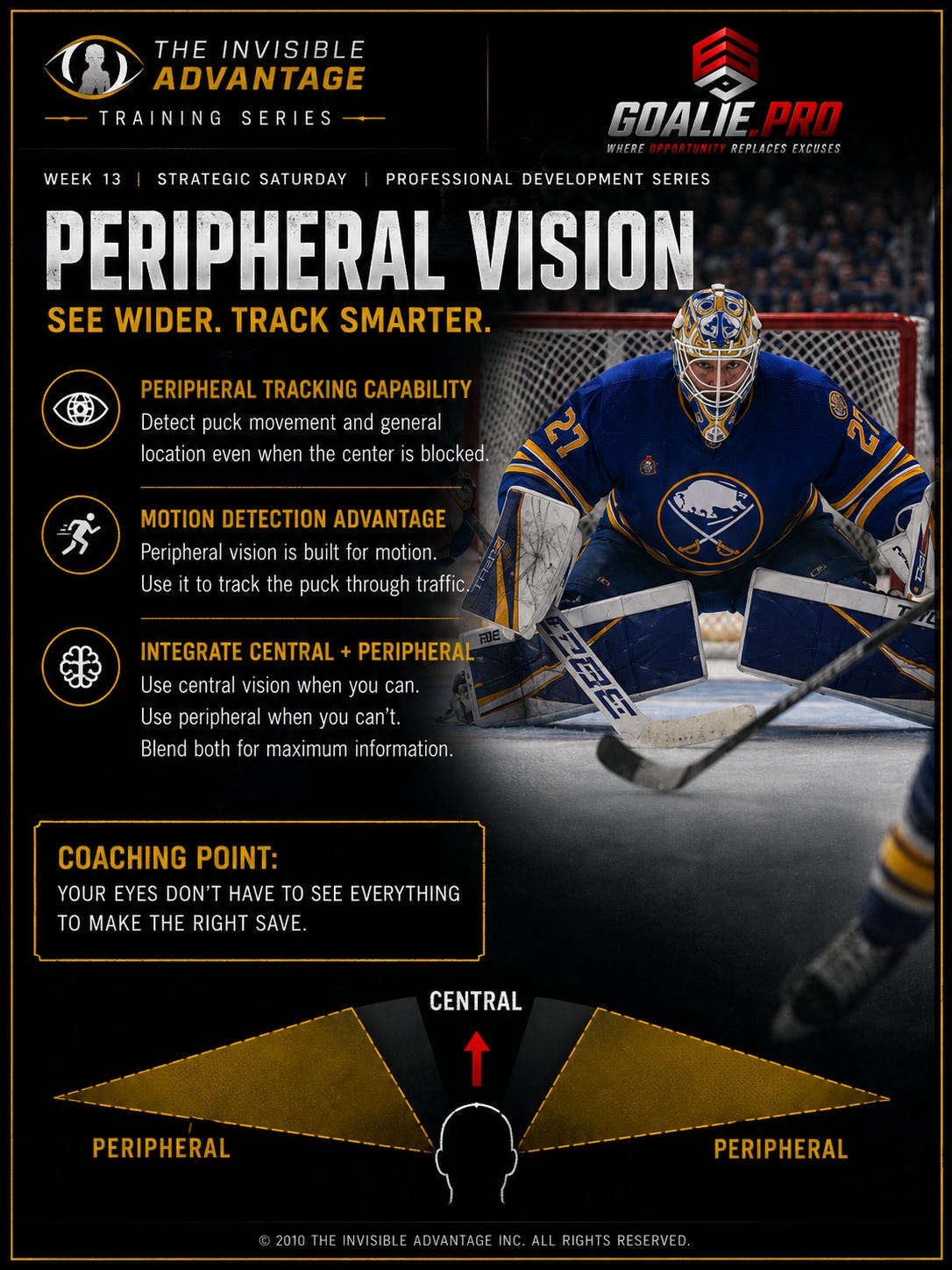
Peripheral vision provides lower-resolution tracking than central vision but functions better under partial obstructions, making it valuable in screen situations.
Peripheral Tracking Capability: Your peripheral visual field can detect puck movement and general location even when central vision is blocked, providing partial tracking that beats complete visual loss.
Developing peripheral tracking capability requires deliberately practicing puck tracking with peripheral vision rather than relying exclusively on central visual focus.
Motion Detection Advantage: Peripheral vision excels at motion detection, not detail processing, making it particularly effective for tracking puck movement through traffic despite poor detail resolution.
Use peripheral motion detection to maintain general awareness of puck location even when central vision cannot achieve precise tracking.
Integration with Central Vision: Effective screen management alternates between central vision when sight lines allow and peripheral vision when direct tracking is blocked, creating hybrid tracking that maximizes total information gathering.
This integration should happen automatically rather than through conscious deliberation about which visual mode to employ.
“YOUR EXCUSES HAVE BEEN REPLACED WITH OPPORTUNITIES” GOALIE.PRO
Developing Screen Confidence
Screen situations often create psychological uncertainty beyond the visual challenge itself, with goaltenders losing confidence in their ability to make saves through traffic.
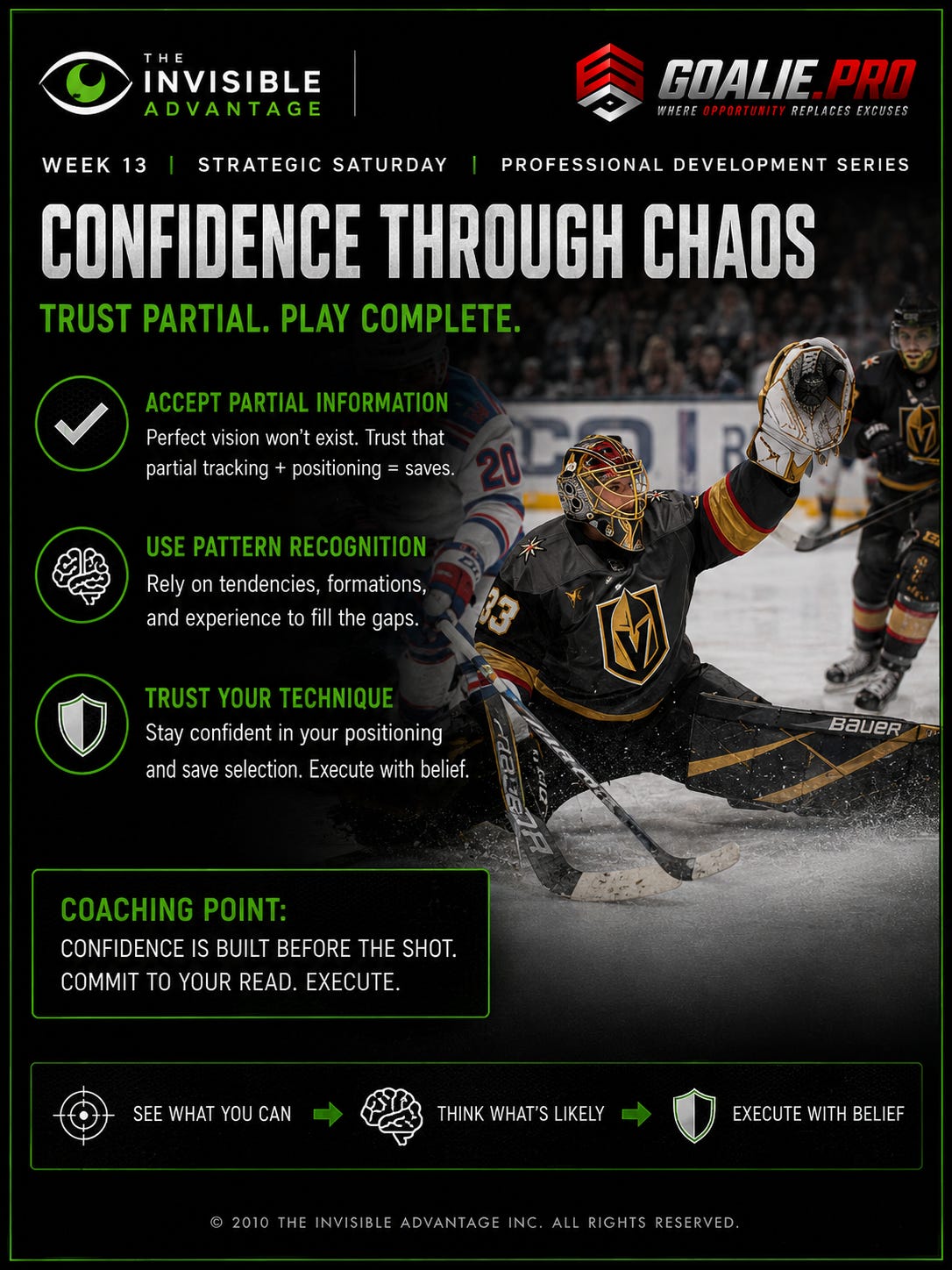
Partial Information Acceptance: Building confidence requires accepting that perfect visual information won’t exist in screen situations, and trusting that partial tracking, combined with pattern recognition and tactical positioning, enables effective save execution.
This acceptance prevents the paralysis that occurs when goaltenders demand complete visual certainty before committing to saves.
Pattern Recognition Application: Screens reduce novel visual input, making pattern recognition more valuable as familiar offensive formations and shooter tendencies provide predictive information compensating for reduced direct visual access.
Your accumulated pattern library becomes more important in screens than clear sight line situations, as patterns fill information gaps created by visual obstruction.
Technical Execution Trust: Maintain confidence in technical execution capability even when visual input is imperfect, trusting that proper positioning and save selection based on available information will produce reasonable save success despite uncertainty.
Screen saves won’t match clear sight line success rates, but systematic approach produces far better results than visual surrender creating complete guessing.
Positioning Adaptations for Screens
Screen situations warrant specific positioning adjustments optimizing coverage given reduced visual information.
Depth Management: Screens generally favour slightly deeper positioning over clear sight lines, trading some angle advantage for improved sight-line access and additional reaction time to compensate for delayed visual processing.
The depth adjustment should be moderate rather than extreme, maintaining reasonable angle coverage while gaining sightline benefits.
Coverage Emphasis: With reduced ability to read exact shot location, positioning should emphasize coverage breadth over precise angle optimization, creating larger target requirements rather than perfect angle positioning.
This coverage emphasis accepts that screens reduce your ability to cheat positioning toward specific shot locations, requiring a more neutral coverage approach.
Movement Readiness: Maintain enhanced movement readiness during screens compared to clear situations, accepting that late visual information may require reactive movement, adjusting to shot characteristics discovered late in the sequence.
Sound Utilization
When visual information degrades, auditory cues provide supplemental information about shot timing and characteristics.
Stick Contact Sound: The sound of the stick contacting the puck during release provides precise shot-timing information, even when visual tracking is blocked, enabling calibration of save-execution timing.
Developing sensitivity to release sound requires conscious attention until auditory processing becomes automatic.
Skate and Equipment Sounds: Player movement sounds, equipment contact, and skating provide contextual information about play development and positioning changes even when visual tracking is compromised.
Ice Impact Recognition: Puck contact with ice, boards, or other players creates distinct sounds that identify trajectory changes or deflection events that visual tracking might miss behind screens.
Managing Visual Reacquisition
After screens pass or dissolve, rapidly reacquiring visual contact proves critical for save execution or tracking secondary play development.
Immediate Reacquisition: The moment visual obstruction clears, your eyes should immediately locate and track the puck without delay or search time.
This requires maintaining awareness of the puck’s approximate location throughout the screening period, enabling rapid reacquisition rather than a complete visual reset.
Post-Screen Processing: Visual reacquisition must happen while processing puck trajectory, speed, and your positioning relative to the puck, creating comprehensive situational awareness rapidly after the screen clears.
Execution Timing: Save execution after screen clearance should account for compressed processing time, potentially requiring earlier commitment based on partial visual information rather than waiting for complete visual confirmation.
Training Screen Management
Screen management capability improves through systematic training that replicates screen conditions and builds specific visual and tactical skills.
Progressive Screen Introduction: Begin training with light screens allowing significant visual access, progressively increasing screen density and obstruction as capability improves.
Immediate training in heavy screen conditions proves inefficient compared to systematic progression from partial to severe visual obstruction.
Visual Persistence Drills: Practice maintaining tracking effort through screens rather than surrendering to visual, building habits of persistent sight-line hunting and peripheral-vision utilization.
Pattern Recognition Development: Study offensive formations and screening tactics systematically, building pattern recognition that enables prediction, compensating for reduced visual information.
Sound Integration Training: Deliberately practice using auditory cues for timing and trajectory information, developing the multi-sensory processing that supplements degraded visual input.
Post-Save Screen Assessment
After making saves through screens, systematic assessment determines whether your screen management proved effective or requires adjustment.
Visual Information Quality: Assess how much visual information you actually obtained through the screen. Did you maintain partial tracking? Did you find sight lines? Or did you surrender visual discipline completely?
Save Execution Appropriateness: Evaluate whether your save selection and technical execution matched the visual information available and tactical situation, or whether you made poor choices based on insufficient information processing.
Pattern Accuracy: When you made decisions based on pattern recognition or prediction, assess whether patterns accurately reflected actual play development or whether your pattern application requires refinement.
Screen management separates goaltenders who maintain performance through adversity from those whose effectiveness collapses when conditions become challenging. Visual discipline, systematic sight line hunting, and tactical confidence in partial information create screen capability that prevents traffic situations from creating automatic vulnerability.
Next Week: Advanced Visual Reads - Blade Position and Release Cues
Development Exercise: This week, during video review of games with heavy traffic, pause when screens develop. Assess: Can you identify any sight lines? What visual information remains available? What patterns exist? This conscious analysis builds the automatic screen management that functions during gameplay.
Sponsored by GOALIE.PRO

1) Saving goalies and their families $15000 per year
2) Giving control back to the Goalie Coaches by bringing everything “in-house” on the house from JOIN ME TODAY!